Is your fiber supplement actually feeding the very gas that pushes acid into your throat? The old way was to just ‘eat more fiber.’ But in 2026, we know that the wrong fiber causes the bloating and pressure that drives heartburn. Precision prebiotics target only the ‘good’ microbes that keep gut pressure low and acid where it belongs. Switch from standard bulk to surgical-grade precision.
For decades, we treated the gut like a simple drainpipe. If things got backed up or felt uncomfortable, the solution was to throw a handful of roughage at the problem and hope for the best. We were told that fiber was the ultimate broom, sweeping away waste and keeping us clean. While the sentiment was honest, the execution was clumsy. We were using a blunt instrument for a task that required a fine-tuned touch.
Living with chronic acid reflux or that nagging tightness in the chest isn’t just about what you ate for dinner. It is often about the internal weather of your digestive system. When the pressure inside your abdomen rises, it acts like a piston, forcing stomach acid upward into places it was never meant to go. Understanding how to manage this pressure is the difference between constant discomfort and true relief.
The gut is a frontier, much like the ones our ancestors settled. It requires careful tending, the right seeds, and a deep understanding of the local ecology. You cannot simply dump generic fertilizer on a field and expect only the wheat to grow. You have to be selective. In the world of gut health, that selection process starts with moving away from bulk fillers and moving toward precision inputs.
Why Generic Fiber Supplements Cause More Heartburn
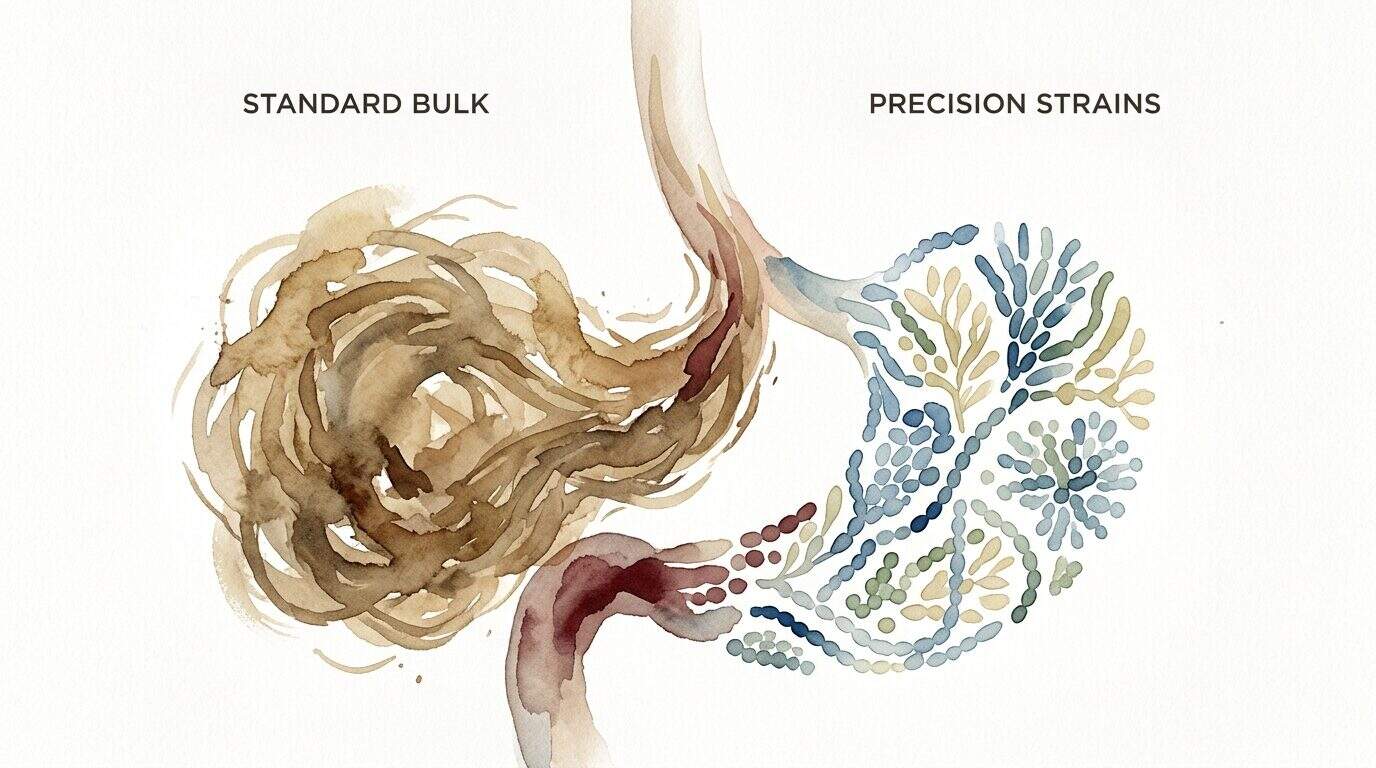
Standard fiber supplements are often made of fermentable carbohydrates that act as a universal buffet for bacteria. When you swallow a large dose of generic inulin or psyllium, you aren’t just feeding the beneficial microbes. You are also feeding the opportunistic ones. These “weeds” in your internal garden consume the fiber rapidly, and as they eat, they produce gas as a byproduct.
This gas has to go somewhere. In a healthy system, it moves through the tract quietly. But when the fermentation happens too fast or in the wrong part of the gut, the gas builds up. This creates what clinicians call intra-abdominal pressure. Think of it like a balloon inflating right under your ribcage. That balloon pushes against your stomach, and your stomach, in turn, pushes against the lower esophageal sphincter (LES).
The LES is the gatekeeper. Its only job is to stay shut and keep acid down. However, it is not a mechanical deadbolt; it is a muscle. When the pressure from gas becomes too great, the gate fails. It leaks. This is why many people find that their “healthy” high-fiber diet actually makes their heartburn worse. They are unintentionally inflating the very balloon that is sabotaging their acid defense system.
Generic fibers are also often high in FODMAPs or other compounds that pull water into the intestines. This adds volume and weight to the digestive load, further increasing the physical stress on the LES. To find relief, we have to stop thinking about fiber as “bulk” and start thinking about it as “information” for specific, helpful bacteria.
The Mechanics of Gut Pressure and Acid Flow
To fix a problem, you have to understand the machinery. Your digestion is a downward-pressure system. From the moment you swallow, a series of muscular contractions called peristalsis moves food toward its destination. This system relies on a clear path and a stable environment. When gas is produced in excess in the small intestine or the upper colon, it creates a counter-current of pressure.
Imagine a chimney. If the air is clear, the smoke rises and exits as intended. But if you block the top of the chimney, the smoke fills the room. Heartburn is essentially “gut smoke” being pushed back into the house because the exit is crowded or the internal pressure is too high. Precision prebiotics work by ensuring that the fermentation happens slowly and in the right locations, preventing that “back-draft” of acid.
Specific microbes, such as Akkermansia muciniphila and certain Bifidobacteria, are the quiet workers of the gut. They don’t create massive clouds of gas. Instead, they produce short-chain fatty acids like butyrate. Butyrate doesn’t cause bloating; instead, it heals the gut lining and keeps the environment acidic enough to deter the gas-producing “bad” bacteria. By feeding only these workers, you maintain the structural integrity of your digestive tract.
Precision is not just a marketing term; it refers to the chemical structure of the prebiotic. Some fibers have long, complex chains that take a long time to break down. Others have specific molecular links that only certain enzymes—carried only by beneficial bacteria—can cut. This “lock and key” mechanism is how we ensure that the fuel goes to the right engine.
Benefits of Precision Prebiotics Over Bulk Fiber
The primary benefit of switching to precision strains is the immediate reduction in post-meal bloating. When the “balloon” in your abdomen doesn’t inflate, the LES can do its job properly. You will likely notice that the “fullness” you feel after eating is less heavy and less likely to result in that familiar burning sensation in the throat.
Another advantage is the secondary effect on the gut lining. Standard bulk fibers can sometimes be abrasive to a sensitive or inflamed gut. Precision prebiotics, particularly those that focus on polyphenols or specific oligosaccharides, actually help to soothe the mucosal barrier. A stronger barrier means less systemic inflammation, which is often a hidden driver of digestive dysfunction.
Long-term use of precision prebiotics also leads to a more resilient microbiome. Instead of a volatile population that spikes and crashes based on your fiber intake, you develop a stable community of “good” microbes. This stability translates to more predictable digestion. You stop having “good days and bad days” and start having a consistent baseline of comfort.
Finally, there is the benefit of nutrient absorption. High-gas environments and high-pressure states can interfere with how well you absorb minerals like magnesium and calcium. By smoothing out the digestive process, you ensure that the nutrients in your food actually make it into your bloodstream rather than being wasted or used to fuel problematic bacteria.
Common Mistakes When Managing Fiber and Heartburn
The most frequent error is the “heroic dose.” A person decides they need more fiber and goes from 10 grams a day to 30 grams overnight. This is a recipe for disaster. The microbiome is like a heavy ship; it takes time to turn. Sudden increases in fiber—even the good kind—overwhelm the existing bacterial population, leading to a massive fermentation event and severe reflux.
Using fiber as a “rescue” supplement is another misunderstanding. Fiber is a foundational tool, not a fire extinguisher. If you are currently experiencing a flare-up of heartburn, dumping a bunch of psyllium into your system will likely make things worse. Fiber should be used to build a system that prevents heartburn, not to treat the acid that is already in your esophagus.
Many people also fail to drink enough water when increasing fiber. Fiber, especially bulk fiber, requires significant moisture to move through the tract. Without it, the fiber becomes a literal clog in the system. This stagnation allows bacteria more time to ferment the material, creating more gas and more upward pressure. If you are increasing fiber, you must increase your water intake proportionally.
Lastly, ignoring the “hidden” fibers in processed “low-carb” or “keto” foods is a major pitfall. Many of these products are packed with chicory root or synthetic fibers to keep the net carb count low. These are some of the fastest-fermenting, gas-producing fibers available. If you are eating these while also taking a supplement, you are likely doubling the pressure on your stomach.
Limitations and When Fiber is Not the Solution
Fiber is a powerful tool, but it is not a panacea. There are conditions where even the most precise prebiotic might cause issues. Small Intestinal Bacterial Overgrowth (SIBO) is a prime example. In SIBO, bacteria that should be in the large intestine have migrated up into the small intestine. When you eat fiber, these bacteria ferment it immediately, right next to the stomach. This causes instant bloating and reflux.
If you find that every type of fiber, no matter how “precise” or expensive, causes you pain and gas, you may need to address the underlying bacterial location before you start a prebiotic regimen. In these cases, a temporary low-FODMAP diet or a targeted antimicrobial protocol might be necessary to clear the path first.
There are also structural issues that fiber cannot fix. A hiatal hernia, where a portion of the stomach slides through the diaphragm, creates a mechanical failure of the LES. While reducing gut pressure with precision prebiotics can help manage the symptoms, it will not “cure” a physical displacement of the organs. It is important to have a clear diagnosis from a professional to know what you are fighting.
Finally, remember that the gut doesn’t work in a vacuum. Stress, poor sleep, and certain medications like NSAIDs can all weaken the gut lining and the LES. If your lifestyle is in chaos, no amount of precision fiber will completely negate the effects of a high-stress environment on your digestion.
Standard Bulk vs. Precision Strains
| Feature | Standard Bulk (Psyllium/Inulin) | Precision Strains (HMOs/Polyphenols) |
|---|---|---|
| Fermentation Speed | Rapid (High gas potential) | Slow/Targeted (Low gas potential) |
| Target Audience | Universal (Feeds “good” and “bad”) | Specific (Feeds key beneficial strains) |
| Impact on Pressure | Increases intra-abdominal pressure | Maintains or reduces pressure |
| Texture/Experience | Gritty, thick, often unpalatable | Soluble, clear, easy to mix |
| Primary Goal | Bowel movement volume | Microbiome modulation & acid control |
Practical Tips for Transitioning Your Fiber Routine
The first step is to clear the slate. If you are currently taking a generic fiber supplement and experiencing heartburn, stop for three days. Let your system settle. This gives you a baseline to work from. Notice how your body feels without the constant input of fermentable bulk.
When you begin with precision prebiotics, start with a “pioneer’s dose.” This means taking a quarter of the recommended amount for the first week. You are introducing new residents to your internal community, and you want to give them time to find their footing without causing a ruckus. If your gut remains quiet and calm, you can slowly increase the dose.
Timing is also important. Many people find that taking their prebiotics in the morning with a large glass of room-temperature water works best. This “wakes up” the digestive tract and provides the microbes with fuel to process throughout the day. Avoid taking fiber supplements right before bed, as the natural slowing of digestion during sleep can lead to gas buildup overnight.
Keep a simple log. You don’t need a complex spreadsheet, just a notebook where you jot down what you took and how your throat and stomach feel two hours later. If you notice a specific brand or type of precision fiber causes a “bubbly” feeling, it might be too much too soon, or it might not be the right strain for your current microbiome.
- Look for Human Milk Oligosaccharides (HMOs): These are highly precise and feed only the most beneficial Bifidobacteria.
- Prioritize Partially Hydrolyzed Guar Gum (PHGG): This is a slow-fermenting fiber that is generally very well-tolerated by people with sensitive guts.
- Include Polyphenols: Compounds from pomegranate or green tea act as “precision prebiotics” by inhibiting bad bacteria while encouraging the growth of Akkermansia.
- Hydrate consistently: Aim for small sips of water throughout the day rather than chugging large amounts at once.
Advanced Considerations: The Role of Cross-Feeding
The microbiome is not a collection of isolated islands. It is a complex network of “cross-feeding.” This is the process where one species of bacteria breaks down a complex fiber into smaller pieces, which are then consumed by another species. The “waste” of the first becomes the “feast” of the second. This is how a healthy gut maintains its balance.
When you use precision prebiotics, you are often trying to kickstart this cross-feeding chain. For example, by feeding Bifidobacteria, you are encouraging them to produce lactate and acetate. Other beneficial bacteria, like Faecalibacterium prausnitzii, take that lactate and turn it into butyrate. This ripple effect is what leads to long-term health.
Advanced practitioners of gut health often rotate their precision prebiotics. Much like a farmer rotates crops to keep the soil rich, switching between different types of precision strains every few months can ensure that you are supporting a diverse range of beneficial microbes. This prevents any one strain from becoming overly dominant, which can sometimes lead to its own set of imbalances.
It is also worth considering the “matrix” in which you take your prebiotics. Taking them alongside fermented foods like small amounts of sauerkraut or kefir can provide the “seeds” (probiotics) at the same time you are providing the “fertilizer” (prebiotics). This synergy can accelerate the repair of the gut environment and more effectively lower the internal pressure causing your heartburn.
Real-World Example: The Case of the “Healthy” Bloat
Consider a person who eats a salad every lunch, takes a psyllium husk supplement, and drinks “green juice.” On paper, they are doing everything right for fiber intake. Yet, every afternoon at 3:00 PM, they experience a sour taste in their mouth and a burning sensation behind their sternum. They feel “stuffed” even though they haven’t eaten a heavy meal.
The problem here is the sheer volume of rapidly fermentable material hitting the gut at once. The “green juice” provides fast-acting sugars for bacteria, the salad provides raw cellulose that is hard to break down, and the psyllium adds a massive amount of bulk. This creates a “perfect storm” of gas production in the upper digestive tract.
By switching the psyllium for a precision HMO supplement and swapping the raw salad for lightly steamed greens, this person reduces the immediate fermentation load. The pressure in the abdomen drops. The LES stays closed. Within two weeks, the afternoon heartburn disappears, not because they “fixed” their acid, but because they lowered the pressure that was pushing it up.
This demonstrates that the solution to heartburn is often subtraction and refinement, rather than just adding more of what we think is “good.” It is about managing the physics of the body as much as the chemistry of the stomach.
Final Thoughts
Heartburn is a signal from your body that the internal environment is out of balance. While it is tempting to reach for a quick fix that neutralizes acid, the more sustainable path is to address the pressure that forces that acid upward. Moving from standard bulk fiber to precision prebiotics is a fundamental shift in how we approach gut health.
Success in this area requires patience and a willingness to listen to your body’s subtle cues. You are tending to a complex ecosystem that has likely been under strain for a long time. Treat it with the respect it deserves by providing high-quality, targeted inputs. The goal is a quiet gut—one that performs its duties without fanfare, gas, or pain.
As you apply these principles, remember that consistency is your greatest ally. Small, precise changes made over time yield far better results than drastic, short-lived overhauls. Start with a clear-eyed look at your current fiber habits, make the switch to precision strains, and give your body the space it needs to find its natural equilibrium once again.