We’ve traded potency for convenience, and our stomachs are paying the price for these watered-down remedies. Modern tea bags are often just ‘herb dust.’ To truly stop heartburn in 2026, you need to return to the potent, whole-root decoctions that actually provide enough mucilage to heal.
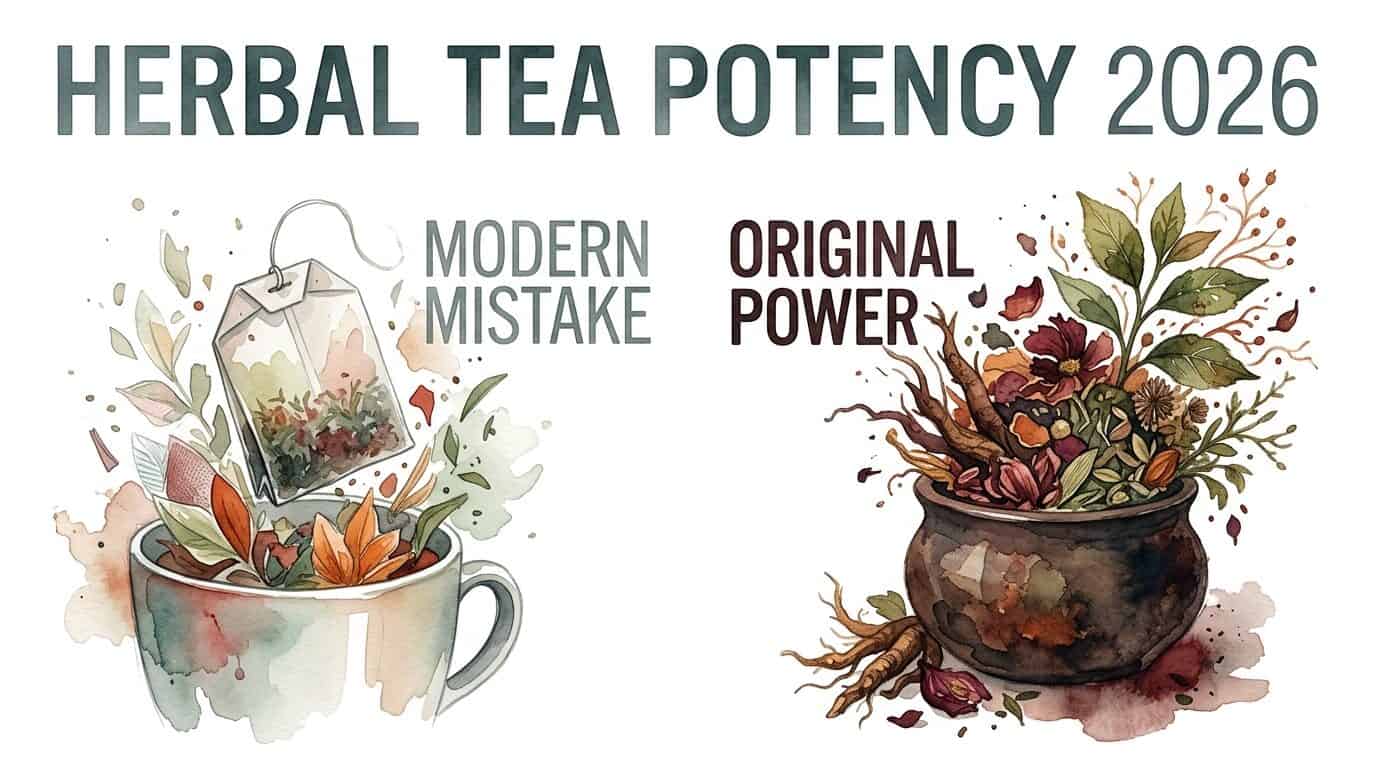
The era of quick-fix antacids and flimsy paper tea bags is fading as more people realize these shortcuts rarely address the underlying irritation. Real relief requires a return to the apothecary methods used before industrial processing stripped the life out of our plants. You deserve a remedy that actually coats the throat and calms the fire instead of just masking the symptoms for an hour.
Navigating the world of herbal medicine can feel overwhelming because of the conflicting advice found online. This guide serves as your roadmap to understanding why the strength of your preparation matters more than the label on the box. We will explore how to extract the true power of the earth to reclaim your digestive health.
Herbal Tea Potency 2026
Herbal tea potency in 2026 refers to the concentration of active medicinal compounds present in a liquid extract. In the context of heartburn and acid reflux, we are specifically looking for mucilage. This is a thick, glue-like substance produced by nearly all plants, but found in high concentrations in specific roots and barks.
Potency is not just about how “strong” the tea tastes. It is about the physical density of the liquid. When you are dealing with a scorched esophagus, you need a viscous barrier that can withstand stomach acid. Most modern tea bags contain “fannings” or “dust,” which are the leftovers from the herb processing industry. These particles have a high surface area that causes them to lose their volatile oils and medicinal properties rapidly.
Real-world application of high-potency tea involves moving away from the “steep for three minutes” mindset. It requires understanding the difference between a delicate flower infusion and a rugged root extraction. If you are using herbs to heal a physical ailment like GERD or occasional heartburn, you are essentially creating a liquid bandage for your internal lining.
How to Extract Maximum Power from Your Roots
Extracting the healing mucilage from plants like Marshmallow root or Slippery Elm requires a specific approach that differs from making a standard cup of Earl Grey. You must respect the biology of the plant to get the results you want.
The Cold Infusion Method
Marshmallow root is the king of mucilage, but it is sensitive to heat. High temperatures can actually break down the long-chain polysaccharides that make the tea thick and soothing. To do this correctly, fill a quart-sized glass jar about one-quarter full with dried, chopped Marshmallow root. Fill the rest of the jar with room-temperature filtered water.
Let this sit for at least four to eight hours, or even overnight. You will notice the water becomes thick and slightly amber. This viscosity is the medicine. Strain the liquid through a cheesecloth, squeezing firmly to get every drop of the “goo” out of the roots. This cold-extracted liquid is far more potent for heartburn than any hot tea bag could ever be.
The Slow Decoction Method
For tougher materials like Licorice root or Dandelion root, a cold soak isn’t enough to break through the cell walls. You need a decoction. Place your roots in a small saucepan with cold water. Bring the water to a very low simmer and cover the pot with a tight-fitting lid to prevent the medicinal steam from escaping.
Simmer the roots for 20 to 40 minutes. This slow heat gradually coaxes the flavonoids and glycyrrhizin out of the woody fibers. When the water has reduced by about one-third, turn off the heat. Allow it to sit for another ten minutes before straining. The resulting liquid will be dark, intense, and packed with the compounds needed to strengthen the stomach lining.
Benefits of Whole-Root Decoctions
Choosing a whole-root decoction over a standard tea bag offers measurable advantages for anyone struggling with digestive distress. The most immediate benefit is the physical coating of the esophagus. This provides a “mechanical” barrier that chemical antacids simply cannot replicate.
Another major advantage is the lack of additives. Many commercial tea bags are treated with epichlorohydrin, a chemical used to prevent the bags from tearing. When you use loose, whole roots, you eliminate the risk of steeping your medicine in microplastics or bleach. You are getting the pure, unadulterated essence of the plant.
Long-term use of high-potency herbal extracts can also help tone the tissues of the digestive tract. Unlike PPIs (Proton Pump Inhibitors), which stop acid production and can lead to nutrient deficiencies over time, mucilaginous herbs support the body’s natural defense mechanisms. They encourage the stomach to produce its own protective mucus, leading to true healing rather than just symptom management.
Challenges and Common Mistakes
The biggest mistake beginners make is using boiling water for every type of herb. Heat is a tool, but it is also a catalyst that can destroy delicate molecules. If you boil Marshmallow root, you will end up with a thin, bitter tea that has lost its “slip.” This lack of viscosity means the tea will slide straight down your throat without sticking to the areas that need protection.
Sourcing is another common pitfall. Many people buy herbs from massive online retailers where the product has been sitting in a hot warehouse for two years. Old herbs are “dead” herbs. They have lost their moisture and their potency. You should look for roots that still have a slight scent and a vibrant color. If the root looks like grey wood chips, it likely won’t provide much relief.
Under-dosing is the third major challenge. A single cup of weak tea is not a clinical dose. To see results in 2026, you must think of these preparations as food-based medicine. This often means drinking two to three cups of a potent decoction throughout the day, especially before meals, to prepare the stomach for digestion.
Limitations of Herbal Remedies
While whole-root decoctions are incredibly powerful, they are not a magic cure for every situation. If your heartburn is caused by a mechanical issue, such as a hiatal hernia, herbal tea may provide temporary relief but will not fix the underlying structural problem. In these cases, the tea is a management tool rather than a permanent solution.
Environmental factors can also limit the effectiveness of these remedies. If you are drinking potent Marshmallow root tea but continue to consume highly processed oils and excessive alcohol, the tea will be fighting an uphill battle. It is designed to soothe an environment that is trying to heal, not to neutralize a constant onslaught of inflammatory triggers.
Furthermore, some herbs can interact with prescription medications. Licorice root, while excellent for the stomach, can affect blood pressure if consumed in large quantities over a long period. People on heart medications or those with kidney issues must be cautious and consult a professional before starting a heavy regimen of potent decoctions.
Modern Mistake vs. Original Power
Understanding the difference between what is sold on grocery store shelves and what is prepared in a traditional apothecary is vital. The following table highlights the measurable differences in these two approaches.
| Feature | Modern Tea Bags (Mistake) | Whole-Root Decoctions (Power) |
|---|---|---|
| Herb Quality | Dust and fannings (low oils) | Whole or cut-and-sifted roots |
| Mucilage Content | Negligible; very thin liquid | High; thick and viscous texture |
| Extraction Time | 2-5 minutes | 4-12 hours (infusion) or 30 mins (decoction) |
| Chemical Exposure | Potential bleach and microplastics | Pure, organic plant material |
| Cost per Dose | High (paying for packaging) | Low (buying bulk roots) |
Practical Tips for the Home Apothecary
Starting your journey into high-potency teas requires a few basic tools and a change in habit. Invest in a good set of glass quart jars. Plastic can leach chemicals into your infusions, especially during long soaking periods. Glass is inert and allows you to see the color and consistency of your medicine as it develops.
Always use filtered or spring water. Chlorine and fluoride found in tap water can interfere with the extraction process and may irritate a sensitive stomach. If your water is “hard” and full of minerals, it might even prevent the mucilage from fully hydrating. Pure water yields the purest medicine.
Keep a “reflux journal” for the first two weeks. Note which herbs you used, how long you steeped them, and how your body responded. You might find that a blend of 70% Marshmallow root and 30% Licorice root works perfectly for you, while someone else might prefer a pure Slippery Elm slurry. Personalization is the key to mastering herbal potency.
Advanced Considerations for Serious Practitioners
Once you have mastered basic decoctions, you can begin to explore synergistic blending. Synergy occurs when two or more herbs work together to create an effect greater than the sum of their parts. For example, combining a mucilaginous herb with a carminative herb like Fennel can both coat the esophagus and reduce the gas pressure that pushes acid upward in the first place.
Timing is another advanced factor. Drinking a potent decoction on a full stomach is less effective than drinking it twenty minutes before a meal. When the stomach is empty, the mucilage can coat the entire lining without being diluted by food. Think of it as “priming” the digestive pump.
Consider the temperature of the final drink as well. While the extraction might happen cold or via a simmer, drinking the tea at body temperature is often most soothing. Extreme cold can cause the stomach to contract, while extreme heat can further irritate a sensitive throat. Aim for a lukewarm temperature that feels like a warm hug for your insides.
Scenario: The Midnight Reflux Protocol
Imagine a person who consistently wakes up at 2:00 AM with a burning sensation in their chest. They have tried standard antacids, but the relief only lasts thirty minutes. In this scenario, the “Modern Mistake” would be to get up and brew a quick tea bag of chamomile. It won’t be strong enough to stop the acid.
Instead, the protocol for “Original Power” starts the evening before. At 6:00 PM, this person prepares a cold infusion of Marshmallow root. By 10:00 PM, the liquid is thick and heavy. They take a small four-ounce “shot” of this viscous liquid right before bed. Because the liquid is so thick, it stays in the esophagus longer, creating a physical shield.
If they still wake up in the night, they have a pre-strained jar of this “liquid bandage” on their nightstand. They don’t need to boil water or wait. They take two slow swallows, allowing the mucilage to coat the irritated tissue. This immediate physical intervention often allows them to fall back asleep without the need for chemical intervention.
Final Thoughts
Returning to the potent ways of the past is the only way to escape the cycle of “herb dust” and ineffective remedies. We’ve spent too long accepting watered-down versions of what nature provides. By mastering the art of the cold infusion and the slow decoction, you reclaim control over your own comfort and health.
The journey toward digestive ease is not found in a pill bottle or a fancy marketing campaign. It is found in the patience of a four-hour soak and the grit to source the highest quality roots available. These methods have stood the test of time because they work with the body’s biology rather than against it.
Start small by choosing one root, like Marshmallow, and perfecting your extraction technique. As you feel the physical difference that a high-potency mucilage makes, you will never want to go back to a standard tea bag again. Trust the process, respect the plant, and let the healing begin.