Heartburn isn’t an acid problem; it’s a traffic jam in your digestive tract. Most treatments focus on ‘static’ suppression—blocking the acid. But the real cause is often ‘slow motility.’ When food sits too long, it ferments and creates pressure. In 2026, the focus is on ‘dynamic’ movement—using natural prokinetics to keep the traffic moving south. Don’t block the acid; move the food.
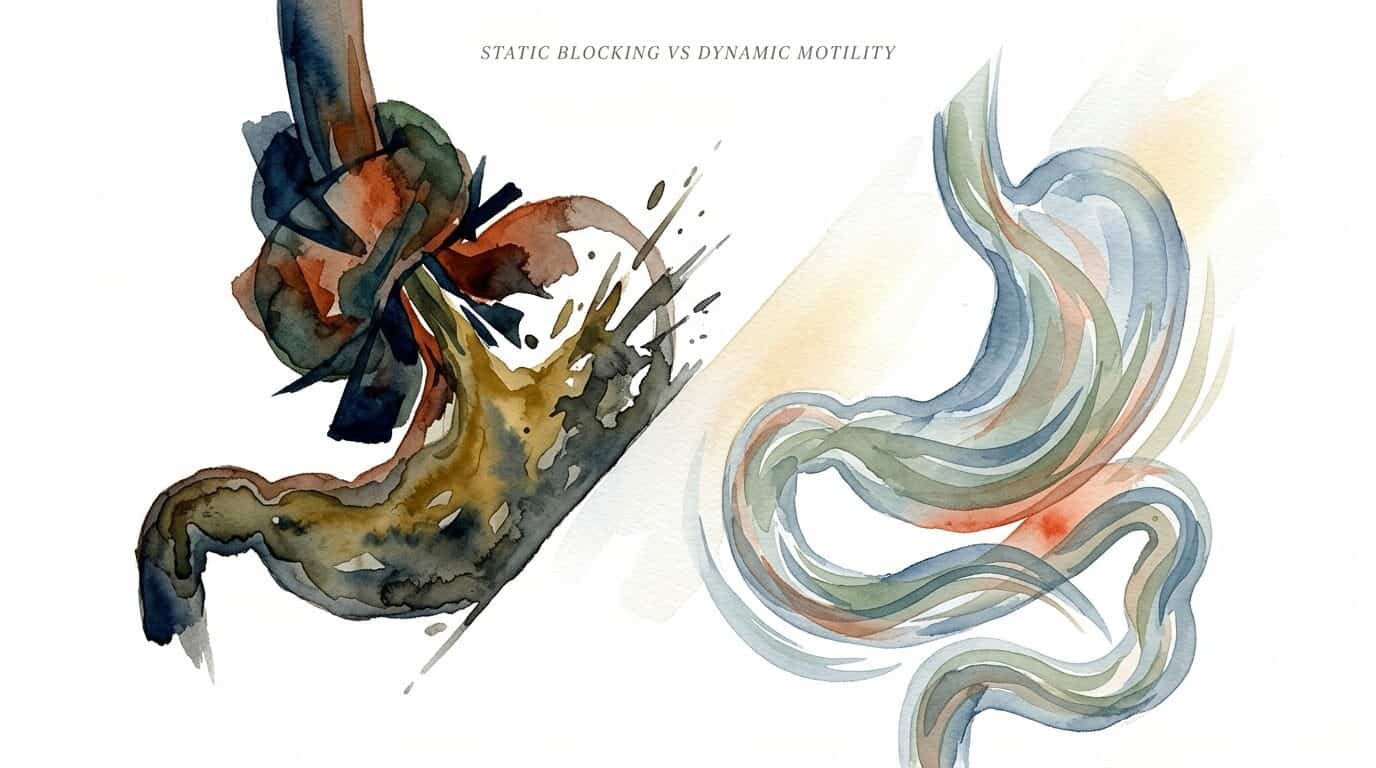
You have likely spent years reaching for an antacid every time that familiar burn climbs up your throat. It is a ritual many of us perform without thinking, yet the burning always returns. We have been taught to view stomach acid as a villain, an accidental overflow that needs to be extinguished like a kitchen fire. This perspective is outdated and ignores the fundamental mechanics of how your body processes fuel.
Digestion is a journey, not a destination. When that journey stalls, the consequences are felt from the stomach upward. If the exit is blocked or the pace is sluggish, the pressure has nowhere to go but up. Understanding this shift from static blocking to dynamic motility is the first step in reclaiming your digestive health and ending the cycle of temporary fixes.
Think of your gut like a long, winding mountain trail. If a fallen tree blocks the path, travelers pile up behind it, growing restless and causing chaos. Simply telling the travelers to be quiet doesn’t solve the blockage. You have to clear the trail. This guide will show you how to identify the stagnation in your system and use time-tested, natural methods to keep your internal gears turning smoothly.
Why Slow Digestion Causes Your Chronic Heartburn
Slow digestion, or delayed gastric emptying, is the primary culprit behind the pressure that forces acid into the esophagus. Under normal conditions, your stomach should process a meal and move it into the small intestine within a few hours. When this process slows down, the stomach remains full for far longer than nature intended. This creates a literal backlog of material that begins to undergo chemical changes it wasn’t supposed to experience in the stomach.
The human stomach is a highly acidic environment designed to break down proteins and kill pathogens. However, when food sits in this acid bath for too long, it begins to ferment. Fermentation produces gases, and gas creates volume. Because your stomach is a confined space, that extra volume increases intra-abdominal pressure. This pressure pushes against the Lower Esophageal Sphincter (LES), the muscular ring that acts as a one-way valve between your throat and your stomach.
The LES is strong, but it isn’t invincible. Chronic pressure from below eventually weakens this valve or forces it to pop open at the wrong time. When that happens, even a normal or low amount of stomach acid can splash upward, causing the sensation we call heartburn. The problem isn’t that you have too much acid; it’s that the pressure is forcing your contents in the wrong direction. You are experiencing a mechanical failure, not a chemical surplus.
In real-world terms, this is why many people find that their heartburn is worse after a large, heavy meal or right before bed. The stomach is struggling to move the mass forward, and gravity is no longer helping to keep things down. By focusing on “moving the food” rather than “killing the acid,” you address the root cause of why that valve is failing in the first place. You are restoring the natural downward flow that keeps the esophagus clear and the stomach comfortable.
How Digestive Motility Functions Step by Step
Understanding the “engine” of your digestion requires a look at the Migrating Motor Complex (MMC). This is your body’s internal cleaning crew. It consists of waves of electrical activity that sweep through the intestines during periods of fasting, usually starting about 90 to 120 minutes after you eat. These waves push undigested food, bacteria, and debris toward the exit, clearing the way for the next meal.
Step one of a healthy digestive cycle begins in the brain. The cephalic phase starts when you smell or think about food, triggering the release of saliva and stomach acid. Once you swallow, the stomach must churn the food into a liquid state called chyme. This requires a steady rhythmic contraction powered by the interstitial cells of Cajal, which act as the “pacemakers” of your gut. If these pacemakers are sluggish, the food stays solid for too long.
Step two involves the opening of the pyloric sphincter. This is the gateway at the bottom of the stomach. In a body with high motility, this gate opens frequently to let small amounts of chyme into the small intestine. In a body with low motility, the gate stays shut, and the stomach continues to stretch. This stretching is what triggers the signals of fullness, bloating, and eventually, the upward pressure that leads to reflux.
Step three is the activation of the MMC after the meal has cleared. This is perhaps the most critical stage for chronic sufferers. If you snack constantly, your MMC never turns on. The “sweeping” never happens. This leads to bacterial overgrowth, such as SIBO, which further increases gas and pressure. To fix the system, you must respect the timing of these waves and provide the body with the signals it needs to initiate movement.
The Role of Prokinetics
Prokinetics are substances that “promote movement.” Unlike laxatives, which often irritate the colon to force a bowel movement, prokinetics work higher up in the digestive tract. They coordinate the contractions of the stomach and small intestine to ensure food moves at a steady pace. Natural prokinetics, such as ginger and artichoke extract, have been used for centuries to settle the stomach and improve “stomach fire.”
Ginger acts on the serotonin receptors in the gut lining, which are responsible for triggering the rhythmic contractions of the digestive muscles. Artichoke extract aids in bile production. Bile is not just for fat digestion; it is also a natural surfactant that helps lubricate the digestive tract and stimulate the MMC. Together, these tools act as a gentle nudge to the system, reminding it to keep the traffic flowing southward.
Benefits of the Dynamic Motility Approach
Choosing to focus on motility over acid suppression offers a range of long-term health advantages. The most immediate benefit is the reduction of bloating and that “heavy” feeling after eating. When food moves at the correct speed, it doesn’t have the chance to ferment and create the gas that leads to discomfort. You feel lighter, more energetic, and less like you need to unbutton your pants after a standard meal.
Better nutrient absorption is another critical advantage. Stomach acid is required to break down minerals like calcium, magnesium, and zinc, as well as to extract Vitamin B12 from food. Static blocking—using PPIs or H2 blockers—neutralizes this acid, often leading to deficiencies over time. By keeping the acid but moving the food, you maintain your body’s ability to extract the nutrients it needs to thrive and maintain bone density.
Focusing on motility also protects the microbiome. A “stagnant” gut is a breeding ground for opportunistic bacteria. When food sits in the small intestine for too long, bacteria that should be in the colon begin to migrate upward. This leads to Small Intestinal Bacterial Overgrowth (SIBO), a condition that causes extreme bloating and can exacerbate reflux. Dynamic movement acts as a natural “flush,” keeping the bacterial populations in their proper place.
Finally, this approach addresses the underlying cause rather than masking a symptom. While an antacid might stop the burn for an hour, it does nothing to prevent the burn from returning tomorrow. Improving motility trains your digestive system to function as it was designed to. It is the difference between constantly mopping up a leak and actually fixing the pipe.
Challenges and Common Mistakes
One of the most frequent errors people make is confusing motility with regularity. You can have a daily bowel movement and still suffer from slow gastric emptying. The stomach and small intestine operate on a different timeline than the colon. Many people assume that because they aren’t “constipated” in the traditional sense, their motility is fine. This misunderstanding prevents them from addressing the upper digestive stagnation that causes heartburn.
Using the wrong tools for the job is another pitfall. Reaching for a stimulant laxative to fix heartburn is like trying to fix a clogged sink by flushing the toilet. It doesn’t address the blockage at the top. You must use prokinetics that target the stomach and the MMC, not just the lower bowels. Over-reliance on “digestive enzymes” can also be a distraction; while they help break down food, they don’t necessarily provide the “push” needed to move that food forward.
Patience is often the hardest hurdle for those transitioning away from acid blockers. Antacids provide near-instant relief by neutralizing the burn. Prokinetics and motility-based lifestyle changes take time to reset the system’s rhythm. It can take several weeks of consistent effort to see a significant shift in how your body handles food. Many people give up too early, returning to the “static” method because it offers a quicker—albeit temporary—fix.
Ignoring the “rest and digest” state is a mistake that can derail even the best supplement protocol. Your digestive system is controlled by the parasympathetic nervous system. If you are eating in a state of high stress, or “fight or flight,” your body will naturally shut down motility to divert energy to your muscles. No amount of ginger can overcome a body that is convinced it is running from a predator. Eating while distracted or stressed is a guaranteed way to stall the engine.
Limitations: When Motility Isn’t the Only Answer
While slow motility is a major driver of reflux, it is not the only factor. Mechanical issues such as a hiatal hernia can physically prevent the LES from closing. In this case, part of the stomach protrudes through the diaphragm, making it nearly impossible for the valve to function correctly. While improving motility will still help, it may not completely resolve the symptoms if the anatomy itself is compromised.
Severe esophageal damage, such as Barrett’s Esophagus, requires medical supervision. If years of acid reflux have significantly scarred the lining of your throat, you cannot simply switch to a “natural” approach without a doctor’s guidance. The risk of cell changes in the esophagus is real and must be monitored through endoscopy. Motility is a tool for restoration, but it cannot always undo decades of structural damage instantly.
Pregnancy is another unique situation where the rules of motility change. The hormone progesterone naturally slows down the entire digestive tract to ensure maximum nutrient absorption for the baby. Simultaneously, the growing uterus creates massive upward pressure on the stomach. While prokinetics like ginger are often safe and helpful, the mechanical pressure of a pregnancy is a temporary biological reality that motility alone cannot fully overcome.
Strictures or physical obstructions in the bowel also represent a boundary for this approach. If there is a literal blockage caused by scar tissue or other medical conditions, “pushing” the system with prokinetics could lead to pain or complications. It is essential to ensure there is a clear path before trying to speed up the traffic. Always consult a professional if you experience sharp pain, unexplained weight loss, or difficulty swallowing.
Comparison: Static Blocking vs. Dynamic Motility
| Feature | Static Blocking (Acid Suppressants) | Dynamic Motility (Prokinetics) |
|---|---|---|
| Primary Goal | Neutralize or stop acid production. | Move food and gas downward. |
| Speed of Relief | Fast (minutes to hours). | Gradual (days to weeks). |
| Nutrient Absorption | Often impaired (B12, Magnesium). | Improved or maintained. |
| Root Cause Focus | Addresses symptoms only. | Addresses mechanical pressure. |
| Microbiome Impact | May increase risk of SIBO. | Reduces bacterial stagnation. |
Practical Tips for Moving the Food
Implementing a motility-first strategy starts with the timing of your meals. Space your meals at least four to five hours apart to allow the Migrating Motor Complex to complete its cleaning cycle. Snacking is the enemy of motility; every time you eat even a small morsel, the MMC shuts down to focus on digestion. Giving your gut “quiet time” is the most effective way to trigger those natural downward waves.
Incorporate ginger into your daily routine, especially before or after your largest meal. You can use a high-quality ginger supplement or simply steep fresh ginger root in hot water. Ginger is one of the few substances that has been clinically shown to speed up gastric emptying without the side effects of pharmaceutical drugs. It “primes” the stomach to move its contents along before the pressure can build up.
Chew your food until it is a liquid. This sounds like basic advice, but it is the most overlooked part of the digestive process. Your stomach does not have teeth. If you send down large chunks of protein or complex carbohydrates, the stomach has to work twice as hard and keep the food much longer to break it down. Liquidizing your food in your mouth reduces the “transit time” in the stomach significantly.
Avoid drinking large amounts of ice-cold water with your meals. Very cold liquids can “stun” the digestive muscles, slowing down the rhythmic contractions needed for motility. Opt for room temperature or warm liquids, and try to limit your intake during the meal itself so you don’t dilute the stomach acid that is trying to do its job. A small cup of warm tea after a meal is a much better companion for your gut engine.
Advanced Considerations for Long-Term Success
For those who have struggled for years, the problem may lie in the vagus nerve. This nerve is the primary communication highway between your brain and your gut. It carries the signals that tell your stomach to produce acid and your intestines to contract. If the vagus nerve is “weak,” your motility will be sluggish regardless of what you eat. You can tone the vagus nerve through simple exercises like gargling loudly, singing, or even cold exposure to the neck and chest.
Bile flow is another advanced factor to consider. Bile is produced by the liver and stored in the gallbladder. It is released when you eat fat, and it acts as a natural stimulant for the small intestine. If your bile is “sludge-like” or stagnant, your motility will suffer. Using “bitters” like dandelion root or gentian before a meal can help stimulate bile flow, which in turn lubricates the entire digestive process and keeps things moving.
Mindful eating isn’t just a “feel-good” practice; it is a physiological necessity. When you eat while scrolling through your phone or driving, your body is in a sympathetic state. In this state, blood flow is diverted away from the gut to the extremities. Setting aside twenty minutes to eat in a calm environment ensures that your digestive organs receive the blood and neural signals they need to perform their duties efficiently. It is the “pioneer way” to treat your meal as a dedicated task rather than an afterthought.
Consider the role of your circadian rhythm. Your gut motility is naturally higher in the morning and afternoon and slows down significantly as night falls. Eating a massive meal at 9:00 PM is a recipe for disaster because you are asking your body to do its hardest work when it is trying to shut down. Shifting your caloric intake to earlier in the day aligns your eating habits with your body’s natural “peak performance” hours for motility.
Scenario: The “Holiday Feast” vs. “Daily Grind”
Imagine two scenarios. In the first, you sit down for a massive holiday dinner. You eat quickly, talk loudly, and consume multiple courses over several hours. By the end, you feel “stuffed” and the heartburn begins almost immediately. In this case, the sheer volume of food has overwhelmed your motility. Your stomach is like a highway during rush hour after a ten-car pileup. No amount of acid blocking will clear that road; you simply have to wait for the slow process of clearing to happen, likely suffering all night.
In the second scenario, you follow the motility-first protocol. You have a moderate meal, chewed thoroughly, with a bit of ginger tea afterward. You wait four hours before having anything else. Even if you eat the same types of food as the holiday feast, the “traffic” moves smoothly because you haven’t exceeded the system’s capacity and you’ve provided the signals for movement. The difference in how you feel isn’t about what you ate, but about how you managed the flow.
These scenarios demonstrate that heartburn is often a result of “load management.” By understanding your “internal traffic” and using prokinetic triggers, you can enjoy a wide variety of foods without the fear of the burn. It is about working with the machinery you have, rather than trying to suppress its natural functions. A pioneer doesn’t complain about the mud on the trail; they build a better wagon and clear the path.
Final Thoughts
Heartburn is a message from your body, not a design flaw. It is a signal that the downward flow of your digestion has been compromised and that pressure is building in places it shouldn’t. By shifting your perspective from “acid is the problem” to “movement is the solution,” you open up a new world of long-term relief. You stop fighting your body’s chemistry and start supporting its mechanics.
Embracing the dynamic motility approach requires a steady hand and a bit of “pioneer grit.” It means changing habits, being patient with your progress, and learning to listen to the subtle cues of your digestive system. The rewards—better energy, improved nutrient absorption, and freedom from the constant burn—are well worth the effort. You aren’t just treating a symptom; you are restoring a fundamental pillar of your health.
Start small by focusing on meal spacing and perhaps adding a bit of ginger to your routine. Pay attention to how your body responds when you give it the space to move. Over time, you will find that the “traffic jams” become less frequent and that your digestive tract can once again handle the journey with ease. Keep the food moving, and the rest will follow.