Introduction
Why treat the fire every single day when you can fireproof the walls once and for all? If you’re just popping pills after the burn starts, you’re losing the war. 2026 is about mucosal protection, not just acid suppression. Build the barrier before the burn begins.
We have spent decades conditioned to think that the stomach is a vat of acid that simply needs to be neutralized. We treat our digestive systems like a kitchen fire, throwing chemical blankets over every spark. But if you keep throwing blankets, eventually you lose the ability to cook. Your body needs that acid to break down minerals, kill pathogens, and signal the rest of your gut to get to work.
The shift from chasing symptoms to building shields is a return to a more rugged, sensible way of living. It is the difference between patching a leaky roof every time it rains and actually replacing the shingles with something that can stand the storm. In this guide, we are looking at how to fortify your internal landscape so you don’t have to live in fear of your next meal.
Understanding your body requires a bit of pioneer grit. You have to be willing to look past the quick-fix labels on the drugstore shelf and understand the mechanics of your own biology. We are moving toward a strategy of resilience. Instead of just stopping the burn, we are going to talk about how to make the tissue so tough and well-protected that the burn cannot take hold in the first place.
Slippery Elm Bark Vs Antacids
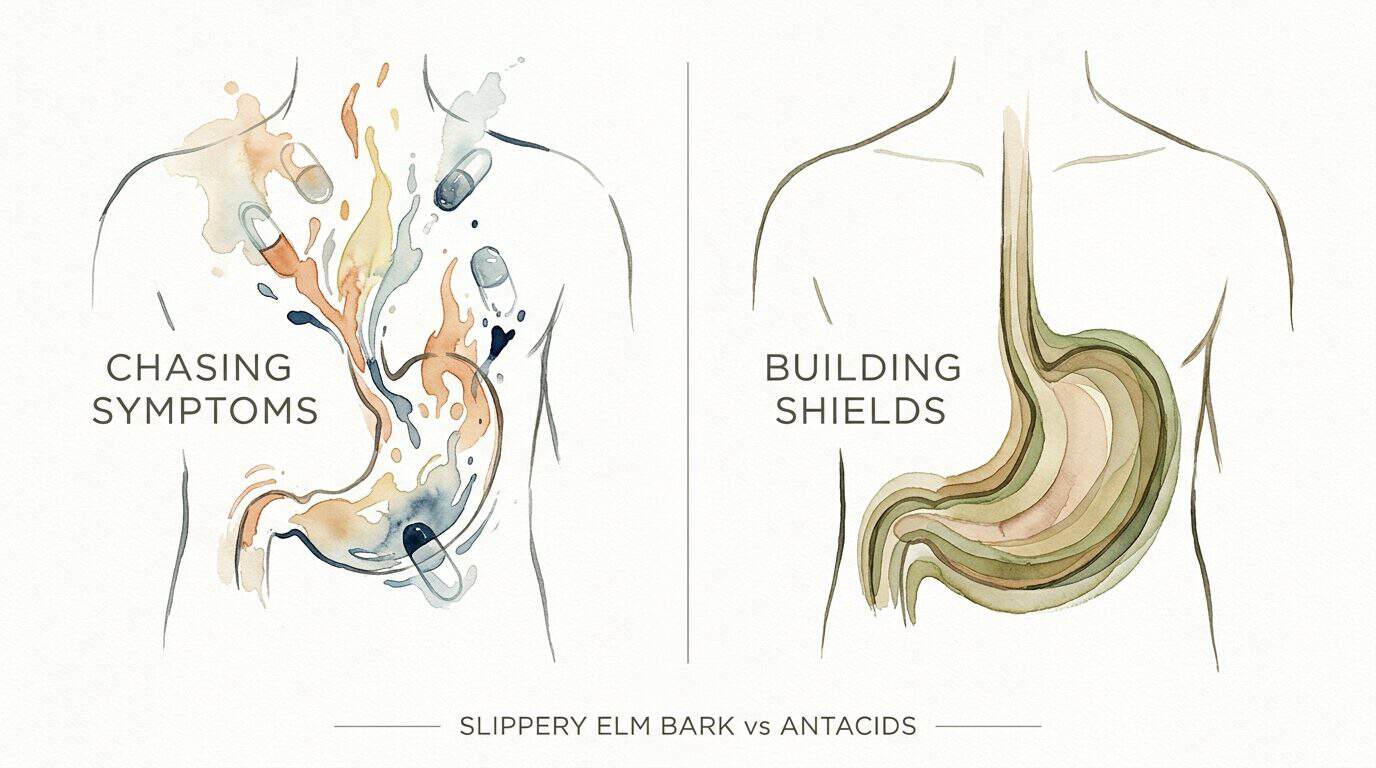
Slippery Elm bark is the inner lining of the Red Elm tree, native to North America. Pioneers and indigenous peoples used it for centuries as a “bandage” for the internal skin. When the powdered bark meets water, it transforms into a thick, slippery substance called mucilage. This is nature’s own protective coating, designed to sit over irritated tissues and give them the peace they need to heal.
Antacids, on the other hand, are chemical compounds designed to react with stomach acid to neutralize it. Most contain calcium carbonate, magnesium hydroxide, or aluminum hydroxide. They work on a simple chemical principle: base meets acid, and the pH goes up. While this provides immediate relief from the sting of acid, it does nothing to address the integrity of the tissue being burned. It’s a temporary truce, not a long-term peace treaty.
In the real world, you might use an antacid when you’ve made a tactical error at a chili cook-off. It’s an emergency tool. Slippery Elm is more like a structural reinforcement. It is used when the lining of the esophagus or stomach has become thin, raw, or chronically irritated. One is a chemical reaction; the other is a physical barrier. Understanding this distinction is the first step in moving away from a cycle of constant symptom management.
Think of it like a wooden fence in a salty coastal environment. An antacid is like spraying the fence with fresh water every time the salt spray hits it. It helps for a moment, but the salt keeps coming. Slippery Elm is like applying a thick, weather-resistant lacquer to the wood. The salt spray still hits, but it slides off without rotting the wood underneath.
How It Works: The Mechanics of Mucilage
The magic of Slippery Elm lies in its polysaccharides. These are complex sugar molecules that have a unique relationship with water. When you mix the powdered bark with liquid, these molecules expand and become viscous. This substance is incredibly resilient. It doesn’t just wash away with the first sip of water you take; it clings to the mucosal membranes of the throat, esophagus, and stomach.
This coating action serves two purposes. First, it provides an immediate physical shield against gastric juices. Second, it acts as a “demulcent,” which is a fancy term for something that soothes and reduces inflammation in the tissue it touches. While it sits there, it allows the underlying cells to undergo their natural repair processes without being constantly agitated by digestive enzymes or acidic vapors.
Antacids work through a process called neutralization. When you swallow a tablet of calcium carbonate, it reacts with the hydrochloric acid in your stomach to produce water, carbon dioxide, and calcium chloride. The acidity drops instantly. However, the body often senses this sudden drop in acid and responds by producing even more acid to compensate. This is known as “acid rebound,” and it’s why people often find themselves needing more and more antacids over time.
To use Slippery Elm effectively, you have to prepare it correctly. If you take a dry capsule, it may not have enough moisture to create the mucilage needed to coat the upper GI tract. The best method is to create a “slurry.” Mix a teaspoon of the powder with a small amount of warm water or tea until it reaches a consistency like thin oatmeal. Drink this about 20 minutes before a meal. This ensures the barrier is established before any digestive activity begins.
Practical application also requires timing. Unlike antacids, which you take when you feel the burn, Slippery Elm is a preemptive strike. You are building the shield in anticipation of the day’s events. This requires a shift in mindset from reactive to proactive. You aren’t waiting for the problem; you are preventing the problem from being able to cause damage.
Benefits of the Mucosal Shield
The primary benefit of choosing a mucosal protector like Slippery Elm over a simple antacid is the preservation of digestive power. Your stomach acid is there for a reason. It is the first line of defense against foodborne bacteria and the essential catalyst for breaking down proteins. By using a barrier method, you keep your acid levels high enough to do their job while protecting your delicate tissues from the fallout.
Another major advantage is nutrient absorption. Chronic use of antacids and more powerful acid blockers can lead to deficiencies in Vitamin B12, Magnesium, and Iron. These nutrients require an acidic environment to be liberated from food. Because Slippery Elm doesn’t significantly alter the pH of the stomach, it allows you to maintain your nutritional status while still finding relief from the discomfort of reflux.
The soothing properties of Slippery Elm also extend further down the digestive tract. Because the mucilage is difficult for the body to fully break down, some of it reaches the intestines. This can provide relief for various types of lower GI irritation as well. It acts as a prebiotic, feeding the beneficial bacteria in your gut, which further strengthens your overall immune system and digestive health.
In terms of tissue health, the demulcent effect is hard to beat. If you have chronic irritation, your esophageal lining can become “weathered” and prone to more serious issues. Constant use of Slippery Elm can help the body maintain the integrity of these cells, preventing the long-term degradation that often accompanies years of untreated or poorly managed acid reflux.
Challenges and Common Mistakes
The biggest hurdle for most people is the texture. Let’s be honest: mucilage is slimy. If you grew up on flavored, chalky tablets, the “muddy” consistency of a Slippery Elm slurry can be a bit of a shock. Many people make the mistake of not using enough water, resulting in a thick paste that is difficult to swallow, or using too much water, which dilutes the protective effect. Finding the “Goldilocks” consistency is key.
Another common mistake is sourcing. As Slippery Elm has grown in popularity, the market has been flooded with low-quality powders. Some are cut with fillers, and others are harvested from trees that haven’t been allowed to mature properly. Genuine, high-quality Slippery Elm should have a light tan to pinkish hue and a distinct, slightly sweet, maple-like scent. If it looks like gray sawdust and has no smell, it likely won’t produce the mucilage you need.
Timing is also a frequent point of failure. People often take Slippery Elm immediately after a meal, much like they would an antacid. By then, the acid is already churning and the irritation has already begun. The mucilage has a harder time “sticking” to a surface that is already covered in food and digestive juices. You must give the shield time to set—usually 15 to 30 minutes before you eat.
Consistency is the final challenge. Slippery Elm is not a “one and done” solution. It is a therapy of accumulation. While you may feel some immediate soothing, the real work of tissue protection and healing happens over weeks of regular use. Many people give up after three days because they aren’t “cured.” You have to think like a builder, not a consumer. You are laying bricks, and that takes time.
Limitations: When the Shield Isn’t Enough
While Slippery Elm is a powerhouse for mucosal protection, it is not a panacea. If you have a mechanical issue, such as a hiatal hernia where the top of the stomach has pushed through the diaphragm, a barrier can only do so much. In these cases, the structural integrity of the valve itself is compromised, and professional medical intervention may be necessary to address the root cause.
There is also the concern of medication interference. Because Slippery Elm is so good at coating the stomach, it can potentially slow down the absorption of other medications you take orally. If you are on life-saving prescriptions for heart health, blood pressure, or other critical issues, you must space your Slippery Elm intake at least two hours away from your meds. Failure to do so could mean your body doesn’t get the full dose of your medicine.
Environmental and sustainability factors are also a limitation. The Red Elm tree is under threat in some areas due to over-harvesting and Dutch Elm Disease. This makes high-quality bark more expensive and harder to find. Relying solely on one botanical can be risky if supply chains are disrupted. It’s always wise to have a secondary plan, such as Marshmallow Root, which has similar mucilaginous properties and is more easily farmed.
Finally, for those with severe, erosive esophagitis or ulcers caused by H. pylori bacteria, Slippery Elm should be a supportive therapy rather than a primary one. You need to clear the infection or address the deep erosion with the help of a healthcare provider. The shield can protect you during the healing process, but it won’t kill the bacteria that are causing the holes in the first place.
Comparison: Antacids vs. Slippery Elm
To help visualize the trade-offs, let’s look at how these two approaches stack up across various categories. Choosing the right tool depends on your specific goals and the situation at hand.
| Feature | Antacids (Calcium Carbonate) | Slippery Elm Bark |
|---|---|---|
| Primary Mechanism | Chemical Neutralization of Acid | Physical Barrier / Mucosal Coating |
| Speed of Relief | Near Instant (1-5 minutes) | Moderate (10-20 minutes) |
| Long-term Impact | Potential “Acid Rebound” | Supports Tissue Healing |
| Nutrient Absorption | Can block B12, Magnesium, Iron | Generally no interference with nutrients |
| Complexity of Use | Low (Pop a tablet) | Moderate (Requires mixing/slurry) |
| Cost | Very Low | Moderate |
| Safety Profile | High, but risk of kidney stones with excess | High, but may slow drug absorption |
When comparing these two, it’s clear that antacids are the “sprint” and Slippery Elm is the “marathon.” If you are in acute agony, an antacid provides the immediate relief needed to catch your breath. However, if you find yourself reaching for those tablets every single day, you are ignoring the structural integrity of your system. This is where the shift to building shields becomes essential for long-term health.
Practical Tips for Building Your Shield
If you’re ready to start fireproofing your system, the most important tip is to get the preparation right. Do not simply swallow a spoonful of dry powder; it’s a choking hazard and it won’t work. Instead, try the “Cold Infusion” or the “Warm Slurry.” For a cold infusion, put a tablespoon of powder in a jar of water and let it sit overnight. In the morning, you’ll have a thick, soothing liquid ready to go. For a warm slurry, mix it like you would making a roux for gravy, adding bits of warm water at a time until smooth.
Adding a bit of cinnamon or a drop of honey can help with the flavor and also provides additional antimicrobial benefits. If you find the texture truly unbearable, you can buy Slippery Elm lozenges. These are excellent for coating the throat and upper esophagus, though they provide less coverage for the stomach itself. They are a great “on-the-go” option for those who travel or work in offices.
Monitor your body’s response. Some people find that their digestion slows down slightly when they first start using mucilaginous herbs. This is usually temporary as the gut adjusts. Ensure you are drinking plenty of water throughout the day. Mucilage needs hydration to stay “slippery.” If you are dehydrated, the bark can actually have the opposite effect and contribute to constipation.
Consider the “Pre-Meal Ritual.” Make it a habit to prepare your Slippery Elm 30 minutes before your largest meal of the day. This ritualistic approach ensures you never forget and that your body has the maximum amount of protection when it needs it most. It’s about creating a lifestyle of maintenance rather than a lifestyle of repair.
Advanced Considerations for Gut Resilience
For those looking to go beyond the basics, consider “synergistic blending.” Slippery Elm works exceptionally well when paired with other gut-healing agents. Marshmallow root (Althaea officinalis) also contains high levels of mucilage and works on a similar principle. Deglycyrrhizinated Licorice (DGL) is another powerful ally that increases the production of protective mucus in the stomach. A blend of these three can create an incredibly resilient barrier that is far more effective than any single herb alone.
Think about the “pH Gradient.” Your stomach needs to be acidic, but your esophagus does not. The goal isn’t to make the whole system alkaline; it’s to ensure the acid stays where it belongs and the tissues that aren’t meant to touch it are shielded. Advanced practitioners often use Slippery Elm alongside apple cider vinegar (carefully timed) to ensure stomach acidity is high enough to close the lower esophageal sphincter (LES) while the Slippery Elm protects the lining. This sounds counterintuitive—adding acid to treat acid—but for many, reflux is actually caused by *too little* acid failing to signal the LES to close.
Consider the impact on the microbiome. Recent studies suggest that the polysaccharides in Slippery Elm act as a specialized fiber that certain beneficial bacteria love. By using this herb, you are not just coating your stomach; you are farming your gut. A healthy microbiome produces short-chain fatty acids that further reduce inflammation and strengthen the gut barrier (the “Leaky Gut” connection). This is a multi-level approach to health that antacids simply cannot offer.
Lastly, look at your stress levels. The vagus nerve controls both the production of stomach acid and the tone of the LES. If you are in “fight or flight” mode, your digestion will be compromised regardless of how much Slippery Elm you take. Combining mucosal protection with nervous system regulation—like deep breathing before meals—creates a comprehensive blueprint for digestive mastery.
Real-World Scenarios
Let’s look at two different people and how they might apply these concepts. First, we have Sarah. Sarah has occasional heartburn after eating spicy food or drinking wine. For her, Slippery Elm is a “situational shield.” If she knows she’s going out for Italian food, she takes a Slippery Elm slurry 30 minutes before she leaves. She avoids the burn entirely without having to resort to antacids that might upset her stomach later that night.
Then we have Jim. Jim has been taking over-the-counter PPIs (proton pump inhibitors) for three years. He wants to get off them because he’s worried about his bone density and B12 levels. Jim can’t just stop cold turkey, or he’ll face a massive acid rebound. He uses Slippery Elm as a “bridge.” He begins taking the slurry three times a day to provide a constant physical barrier while he slowly tapers his medication under a doctor’s supervision. The Slippery Elm protects his raw esophagus from the temporary surge in acid as his body recalibrates.
In another scenario, consider an athlete. High-intensity training can often cause “runner’s reflux” due to the physical jarring of the stomach. By taking a Slippery Elm infusion before a long run, the athlete provides a mechanical cushion for the stomach contents, reducing the likelihood of acid splashing up into the esophagus during the workout. It’s a practical, drug-free way to improve performance and comfort.
These examples show that whether you’re dealing with occasional annoyance or a long-term transition, the principle remains the same: protect the tissue first. Theory is fine, but application is what saves your health. Simple numbers: if Sarah spends $20 on a bag of Slippery Elm powder that lasts her six months, she’s not only saved money on antacids, but she’s also invested in the long-term integrity of her digestive tract.
Final Thoughts
The journey from symptom suppression to mucosal protection is a fundamental shift in how we view the body. It is a move away from the “war” on acid and toward the “fortification” of the self. By choosing to build a barrier with tools like Slippery Elm, you are respecting your body’s natural processes while still demanding relief from discomfort. It is an authoritative way to take back control of your health.
Remember that the gut is the foundation of your overall well-being. When it is inflamed or poorly protected, the rest of your systems suffer. Fireproofing your internal walls isn’t just about stopping a burn; it’s about creating an environment where nutrients are absorbed, energy is high, and your body can focus on thriving rather than just surviving. It takes a bit more effort to mix a slurry than to chew a tablet, but the dividends paid in long-term health are well worth the grit.
Start experimenting with these methods. See how your body responds to a preemptive shield rather than a reactive chemical. You might find that once the “walls” are fireproofed, the fire doesn’t seem so threatening anymore. Keep exploring these natural systems and building your own personal blueprint for resilience. The path to health is often found in the old ways, updated for the modern world.