Produce Your Own Healing: A Guide to Homegrown Acid Reflux Relief
When the next supply chain glitch hits, will your stomach be at the mercy of a shipping container or your own windowsill? Dependence is the root of digestive anxiety. In 2026, the most effective heartburn remedies aren’t being shipped across oceans; they’re being grown in living rooms. Discover how producing your own mucosal-repairing plants provides a level of potency no factory can match.
The modern world has conditioned us to look toward the pharmacy shelf for every minor discomfort. We have traded our ancestral knowledge for convenience, and in doing so, we have lost our autonomy. When you grow your own medicine, you control the soil, the water, and the timing of the harvest, ensuring that the active compounds are at their peak when you need them most.
Learning to manage digestive health through botany is not just a hobby; it is a vital skill for self-sufficiency. This guide will walk you through the process of selecting, growing, and preparing the most effective plants for soothing the fire of acid reflux. You will find that the earth provides exactly what the body needs to heal itself, provided you know how to tend the garden.
Stepping away from the cycle of over-the-counter dependence allows your body to reset. Natural remedies focus on repairing the mucosal lining rather than simply masking the symptoms with chalky tablets. This shift from suppression to healing is the cornerstone of true digestive health and long-term wellness.
Grow Your Own Acid Reflux Relief
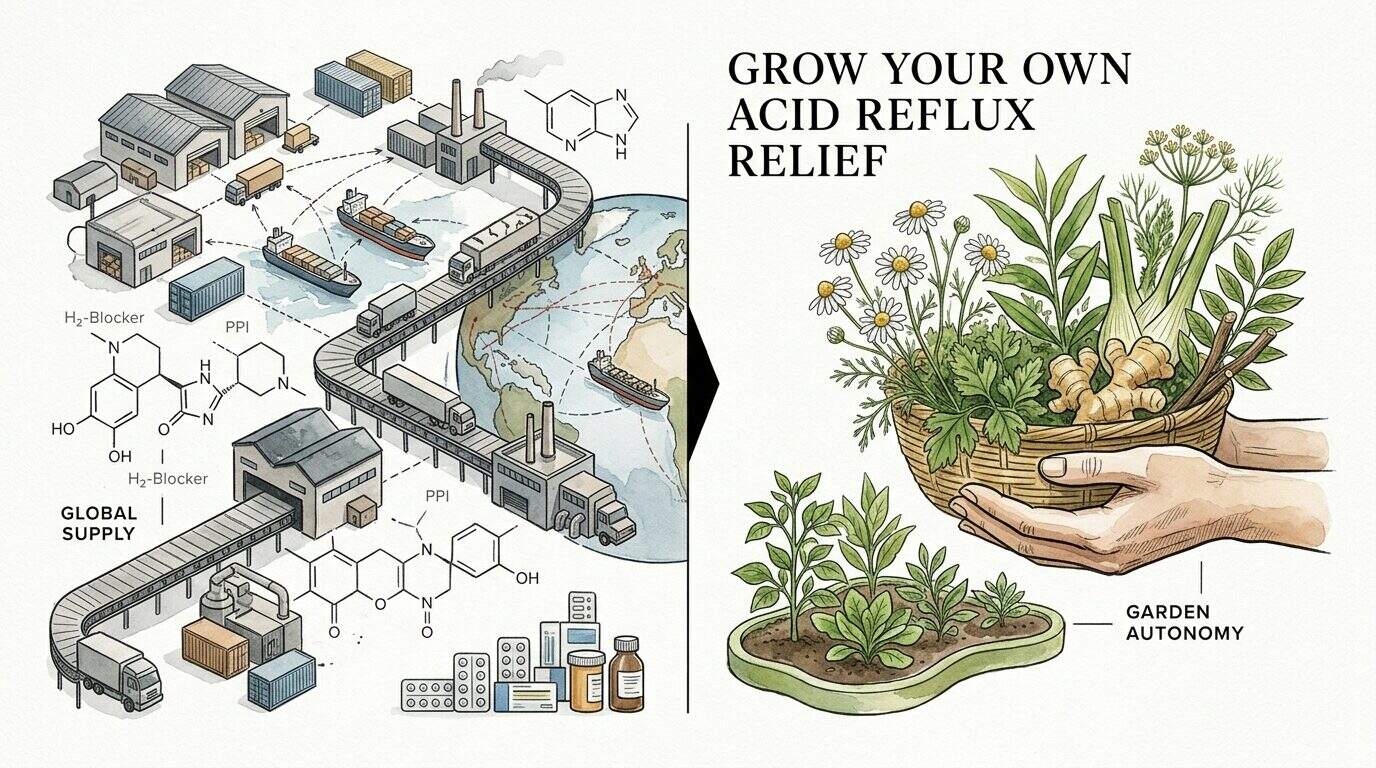
Growing your own acid reflux relief involves cultivating specific plants known as demulcents and carminatives. Demulcents are herbs that are rich in mucilage, a gooey substance that coats and protects irritated tissues. Carminatives, on the other hand, help improve digestion and prevent the gas and bloating that often drive stomach acid upward into the esophagus.
This approach to health focuses on the “mucosal barrier,” which is the internal “skin” of your digestive tract. When this barrier is thin or damaged, acid causes pain and inflammation. Homegrown remedies like Marshmallow root or Aloe Vera work by providing a physical layer of protection while the body repairs the underlying tissue. It is a mechanical solution as much as a chemical one.
In the real world, this looks like a few well-placed pots on a sunny balcony or a dedicated corner of a backyard garden. Instead of reaching for a plastic bottle of pills, you reach for a fresh leaf or a dried root. You are participating in your own recovery, which reduces the stress that often exacerbates digestive issues in the first place.
Think of these plants as a liquid bandage for your throat and stomach. While commercial antacids neutralize the acid you need for digestion, these plants soothe the irritation without disrupting your body’s natural chemistry. It is a more harmonious way to treat the “burn” while keeping your digestive fire intact for breaking down food.
How to Cultivate Your Digestive Garden
Creating a medicinal garden for reflux requires a focus on four primary plants: Marshmallow (Althaea officinalis), Aloe Vera, German Chamomile, and Lemon Balm. Each of these serves a different role in the “anti-reflux” protocol. Success starts with understanding the unique needs of each species and how they interact with your local environment.
Selecting the Right Species
Marshmallow root is the king of demulcents. Unlike the sugary confection, the plant is a hardy perennial that produces a thick, cooling sap. You want Althaea officinalis, not the common garden mallow, as the medicinal concentration is significantly higher in the “official” variety. It requires moist soil and a fair amount of space, as the roots can grow quite deep over two to three years.
Aloe Vera is the easiest to grow indoors and provides immediate relief. The inner gel of the Aloe barbadensis Miller leaf is what you are after. This plant thrives on neglect, needing only bright light and occasional deep watering. Ensure you use a well-draining succulent mix to prevent root rot, which is the most common killer of this desert healer.
The Planting and Growing Process
Start your Marshmallow seeds in early spring after a period of cold stratification. These plants enjoy full sun but can tolerate partial shade if the soil remains damp. Because you harvest the roots, it is best to plant them in loose, friable soil or deep raised beds. This makes digging them up much easier and prevents the roots from becoming stunted or twisted.
Chamomile and Lemon Balm can be started from seed or small starts. Chamomile prefers cooler weather and will self-seed readily, providing a permanent carpet of anti-inflammatory flowers. Lemon Balm is a member of the mint family and is incredibly vigorous. It is often best kept in a large pot to prevent it from taking over your entire garden, yet its leaves are essential for calming the nervous system’s impact on digestion.
Harvesting for Maximum Potency
Timing is everything when it comes to medicinal strength. For Marshmallow, you must wait until the late autumn of the second or third year when the plant dies back. This is when the energy and mucilage are concentrated in the root. For Aloe, always harvest the oldest, outermost leaves first, as they contain the most developed gel and highest nutrient density.
Chamomile flowers should be picked on a sunny morning just after the dew has dried but before the sun is at its peak. This preserves the delicate essential oils like bisabolol, which calms the esophageal sphincter. Lemon Balm leaves are best harvested before the plant flowers, as the flavor and medicinal oils shift toward a more bitter profile once the blooms appear.
The Advantages of the Windowsill Pharmacy
The primary benefit of growing your own reflux relief is the absolute certainty of purity. Commercial herbal supplements are often plagued by “fillers” or low-quality harvests that have sat in warehouses for years. When you harvest a Marshmallow root from your own backyard, the polysaccharides are fresh, active, and significantly more effective at coating the esophagus.
Cost is another major factor that favors the gardener. A single packet of seeds costs less than a one-month supply of name-brand acid blockers. Over several years, a perennial garden provides thousands of doses of medicine for the price of a few bags of organic compost. You are essentially printing your own health insurance in the form of green leaves and sturdy roots.
Autonomy provides a psychological boost that cannot be measured in milligrams. Knowing that you are not dependent on a fragile global logistics network for your comfort reduces “survival stress.” This lower stress level actually helps lower stomach acid production, creating a positive feedback loop between the garden and your gut.
Environmental impact is also drastically reduced. There are no plastic bottles to discard, no carbon emissions from shipping, and no industrial pesticides used in the process. You are contributing to a healthier planet while you build a healthier body. It is a holistic approach that honors the connection between the soil and the human microbiome.
Challenges and Common Pitfalls
Mistakes in the medicinal garden usually stem from a lack of patience. The most common error is harvesting roots too early. A one-year-old Marshmallow root simply doesn’t have the mucilage content of a three-year-old root. If you use young roots, you will likely find the remedy “doesn’t work,” leading you back to the pharmacy. Grit and time are required for the best results.
Identification errors can also be dangerous. Many plants look similar to medicinal herbs but lack the same chemical properties. Always buy seeds from reputable organic heirloom suppliers rather than “wildcrafting” if you are a beginner. Growing the wrong subspecies might result in a plant that is beautiful to look at but offers no relief for your heartburn.
Soil quality is another frequent stumbling block. Plants grown in depleted, chemically-treated soil will not produce the same level of secondary metabolites—the stuff that actually heals you—as those grown in rich, living soil. If you treat your garden like a factory, your medicine will be as weak as a factory product. Focus on feeding the soil with compost and leaf mold.
Over-processing is the final pitfall. Many people try to make complex tinctures or extracts when a simple “cold infusion” is more effective. For demulcent herbs like Marshmallow, heat actually breaks down the long-chain carbohydrates that provide the soothing coating. Knowing the right preparation method is just as important as knowing how to grow the plant.
Limitations of Homegrown Remedies
While homegrown herbs are powerful, they are not a “magic bullet” for every situation. If you are experiencing “alarm symptoms” such as difficulty swallowing, unexplained weight loss, or chronic vomiting, you must seek professional medical diagnostics. Herbs are excellent for management and repair, but they cannot fix a structural issue like a large hiatal hernia or advanced Barrett’s Esophagus without medical intervention.
Environmental constraints can also limit what you can grow. Aloe Vera will not survive a hard freeze, so those in northern climates must have adequate indoor light for the winter months. Marshmallow root requires space that an apartment dweller might not have. You must adapt your “pharmacy” to your specific geography and living situation.
The “Time-to-Effect” is much longer with natural remedies compared to chemical acid blockers. A pill might stop the burn in twenty minutes, whereas a mucosal-repair protocol using homegrown herbs can take weeks of consistent use to fully heal the tissue. If you are looking for an “instant fix” every time you eat a spicy meal, you may find the slow pace of herbalism frustrating.
Seasonal availability is a reality of the garden. Unless you are skilled at drying and storing your harvest, you may find yourself without remedies during the deep winter months. This requires planning and a level of foresight that most modern consumers aren’t used to practicing. You must think six months ahead of your symptoms.
Comparison: Homegrown vs. Commercial Solutions
Understanding the difference between what you grow and what you buy helps clarify the value of your labor. The following table compares standard commercial antacids/PPIs with homegrown herbal remedies across several key metrics.
| Feature | Commercial PPIs/Antacids | Homegrown Herbal Remedies |
|---|---|---|
| Primary Mechanism | Shuts down acid production or neutralizes acid. | Coats and repairs the mucosal lining. |
| Nutrient Absorption | Can inhibit B12, Magnesium, and Calcium uptake. | Generally does not interfere with digestion. |
| Cost Over Time | Recurring monthly expense. | Initial seed cost; nearly free thereafter. |
| Availability | Subject to supply chain disruptions. | Available as long as the garden is tended. |
| Side Effects | Potential for rebound acid and gut dysbiosis. | Minimal; usually supportive of gut flora. |
This comparison shows that while commercial options offer convenience, homegrown solutions offer long-term sustainability and fewer systemic side effects. The “cost” of the garden is measured in time and attention, while the “cost” of the pharmacy is measured in dollars and potential long-term health trade-offs.
Practical Tips for Success
To get the most out of your medicinal plants, start with the soil. Use a mix of compost, aged manure, and perlite to ensure your herbs have the nutrients they need to build medicinal compounds. A “hungry” plant is a weak plant, and weak plants make for weak medicine. Think of yourself as a shepherd of the soil first and a gardener second.
- The Cold Infusion Technique: For Marshmallow root, place one tablespoon of dried, shredded root in a jar of cold water overnight. The resulting liquid will be thick and “mucilaginous,” providing the best possible coating for your throat.
- Aloe Freshness: Only fillet an Aloe leaf right before you intend to use it. The gel oxidizes quickly once exposed to air, losing its anti-inflammatory potency within hours.
- Succession Planting: Plant Chamomile every two weeks during the spring to ensure a continuous harvest of fresh flowers throughout the summer months.
- Mulching: Use a thick layer of straw or wood chips around your Marshmallow plants to keep the soil moist and the roots cool, which encourages more sap production.
When you are dealing with an active flare-up, consistency is more important than quantity. Drinking small amounts of your herbal infusions throughout the day is far more effective than drinking a large amount once. This keeps a constant “protective film” over the irritated tissue, allowing the body to perform repairs without being constantly interrupted by acid.
Advanced Considerations for the Serious Practitioner
Once you have mastered the basics of growing, you can begin to look at “stacking” your remedies for better performance. This involves blending herbs to target different aspects of reflux. For example, a blend of Marshmallow (for coating), Lemon Balm (for the nervous system), and Fennel (for gas) creates a comprehensive remedy that addresses both the symptoms and the triggers of reflux.
Scaling your production is also an important consideration. If you find that you need these remedies daily, you will need at least three to four large Marshmallow plants to allow for a rotating harvest. This ensures you never “over-harvest” a single plant to the point of killing it. Proper garden management allows for a perpetual supply of medicine year after year.
Consider the “terroir” of your garden. Just like wine, the chemical profile of a medicinal herb changes based on the minerals in your soil. Adding specific amendments like kelp meal or rock dust can increase the trace mineral content of your herbs, making them more nutrient-dense and effective. Serious practitioners often have their soil tested to ensure it is optimized for medicinal secondary metabolites.
Long-term storage techniques like solar dehydration can preserve your harvest without using electricity. Learning to dry herbs so they retain their color and scent is an art form. If your dried herbs look brown and smell like hay, they have lost their medicine. They should look almost as vibrant as the day they were picked, which indicates that the essential oils and polysaccharides are still intact.
Example Scenario: The Winter Heartburn Protocol
Imagine it is January, and the local pharmacy is out of stock of your usual antacid due to a transport strike. Because you planned ahead, you have a jar of dried Marshmallow root, a jar of dried Chamomile, and a thriving Aloe plant on your kitchen windowsill. You are not panicked; you are prepared.
Each evening, you put a tablespoon of the shredded Marshmallow root in a cup of water to sit overnight. In the morning, you strain the thick liquid and drink it on an empty stomach to coat your esophagus for the day. After lunch, you brew a strong cup of your homegrown Chamomile to settle any inflammation from the meal.
If you experience a sudden “burn” in the evening, you cut a small piece of Aloe leaf, peel away the green skin, and swallow the clear gel. Within minutes, the cooling effect of the fresh enzymes and polysaccharides begins to work. This protocol costs you nothing at the moment of use and provides a level of relief that is physically superior to the chalky tablets you used to rely on. This is the power of the windowsill pharmacy in action.
Final Thoughts on Garden Autonomy
Transitioning from a consumer to a producer of your own medicine is a profound shift in mindset. It replaces the anxiety of “running out” with the quiet confidence of the harvester. The fire of acid reflux is often a signal from the body that it is out of balance, and the act of gardening—tending to soil, water, and light—is a powerful way to return to that balance.
Start small with a single Aloe plant or a patch of Chamomile. As you see the results and feel the relief, your garden will naturally expand. You will find that the more you provide for your own needs, the less the “glitches” of the outside world matter. True health is grown from the ground up, not bought from a box.
Take this knowledge and apply it with the grit of a pioneer. Experiment with your soil, refine your drying techniques, and listen to what your body tells you about each harvest. The path to digestive freedom is literally right outside your door, waiting for you to plant the first seed. Embrace the autonomy that comes from being your own healer.